Home remedies for hair removal: what works and what is a myth
Turmeric, baking soda, sugar paste and egg white with sugar. What really works among home remedies for hair removal, what only irritates the skin and when only a laser helps.
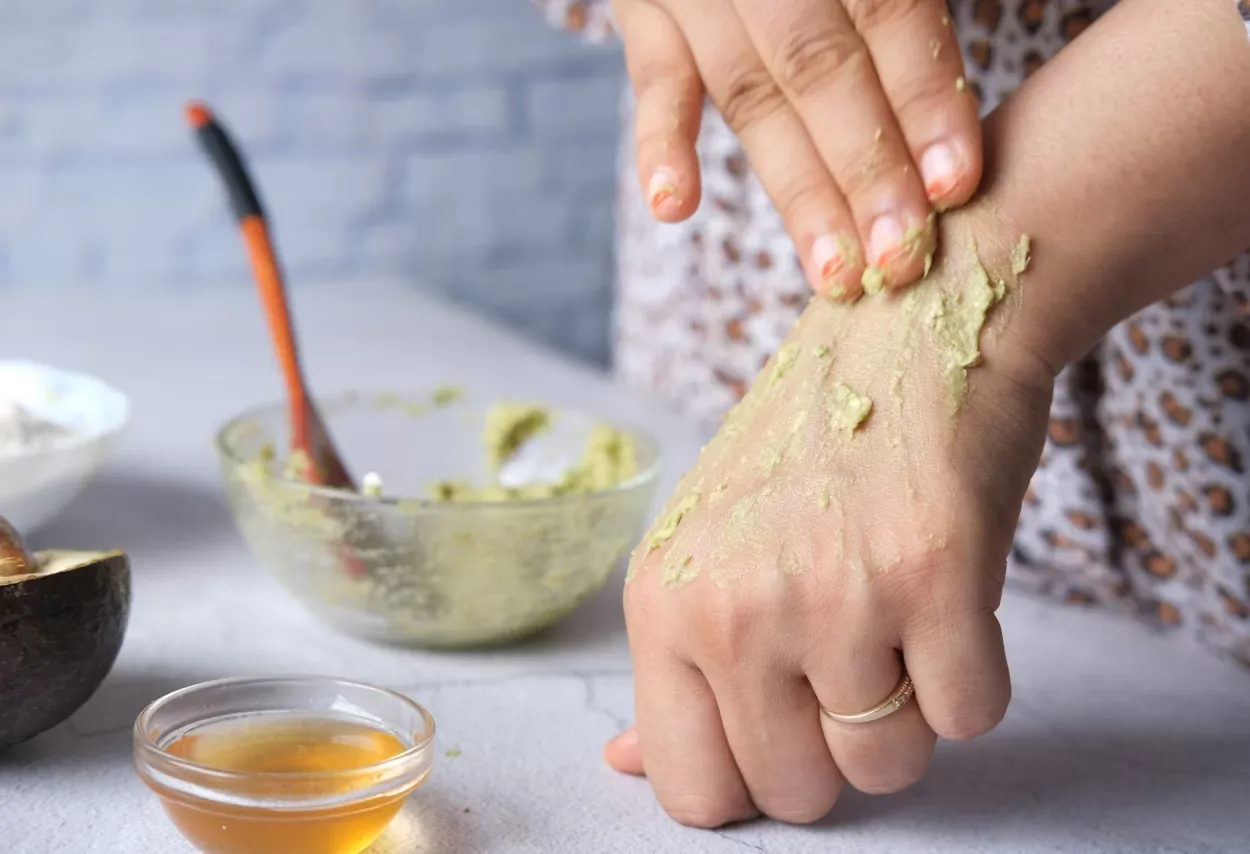
Do home remedies for hair removal work?
Partly — and differently from what is usually promised. Mixtures of turmeric, baking soda, honey or lemon act on the surface of the skin: they work as a gentle scrub and can soften the hair or wipe it off mechanically. They do not reach the follicle, though, and therefore cannot prevent growth for good. The only home method that removes hair together with the root is sugar paste — and even that is a solution for two weeks.
That does not mean home remedies are useless. They are cheap, you have the ingredients at home and you do not have to go anywhere for them. It is just good to know what to expect from them.
What is the difference between depilation and epilation?
Depilation removes only the visible part of the hair above the surface of the skin — the root stays untouched, so within a few days the hair grows back. Shaving and depilatory creams belong here.
Epilation removes the hair with its root. The result lasts weeks, not days. Wax, sugar paste, epilators and lasers belong here. Only with a laser is the follicle destroyed — with the other methods the follicle stays functional and hair grows from it again.
Home recipes sit somewhere in between: they either work as a scrub (turmeric, baking soda, coffee grounds) or as full depilation or epilation (sugar paste).
Which home remedies for hair are tried most often?
Four recipes are the most widespread. All are mixed from common ingredients and all are applied to the area you want to treat.
| Recipe | Composition | Procedure |
|---|---|---|
| Turmeric with milk | 1 teaspoon of turmeric + 2 tablespoons of milk | Leave for 30 minutes, remove with circular movements |
| Lemon, honey and oats | 8 drops of lemon juice + 1 tablespoon of honey + half a spoon of finely crushed oats | Let it stand for 2 hours, act for 15 minutes, massage for 5 minutes, wash off and moisturise |
| Baking soda and coffee | 1 teaspoon of baking soda + 1 teaspoon of water + 2 teaspoons of finely ground coffee | Leave for at least 5 minutes and rinse off |
| Egg white with sugar and starch | 1 egg white + half a kilo of sugar + half a spoon of corn starch | Apply to the treated area |
A chapter of its own is a mixture of 3 spoons of turmeric and 1 spoon of honey, credited with the ability to slow hair growth. It does not eliminate the root either — so if you expect the hair to stop growing, you will wait in vain. Turmeric is great for inflammation and for healing or masking small skin blemishes, but it will not outsmart hair.
Does baking soda remove hair?
No. Baking soda (sodium bicarbonate) has an alkaline pH when dissolved in water and is an excellent household helper — a cup of soda in the bath eases itching and softens the skin after bathing. A paste of soda applied to hair, however, softens it at most. Do not expect permanent removal from it: the follicles sit deep under the skin and soda has no way of reaching them.
Other natural products that get recommended
Other recipes circulate too. For the record: their effect ranges from very mild to zero.
| Product | What is claimed about it | How it is used |
|---|---|---|
| Papaya | the enzyme papain is supposed to “dissolve” hair | mash a fresh piece, massage the paste in for a few minutes and rinse, repeat several times a week |
| Liquorice root | traditional Chinese medicine credits it with slowing growth | prepare a decoction from the root and apply it to problem areas |
| Peppermint oil | cooling effects, allegedly hair removal too | apply, massage gently, leave for about 20 minutes and rinse |
| Pomegranate | astringent properties are said to slow growth | apply the squeezed juice, leave it to act and rinse |
None of them harms the hair enough to stop it growing. If you want to stay with home methods, sugar paste or waxing makes more sense — both at least remove the hair with its root.
Are there herbs against hair growth?
There are plants that affect hormonal balance — and thereby, indirectly, how strong a woman’s hair growth is. They have nothing to do with removing hair, though.
Marjoram regulates hormone levels through its composition, eases menstrual pain, supports milk production and improves digestion. It is precisely because of its effect on hormones that the rumour arose that it works against hair growth. It has no such effect — with its help you will at most keep ordinary female hair in a finer form.
Maca (Peruvian cress) regulates gland activity, balances hormones and supports fertility and immunity. Like marjoram, it ensures a woman grows only the hair normal for her, but it has no influence on eliminating the growth.
If visible hair typical for men grows on your face, this is not a task for herbs but for a doctor: have the specific cause identified. Healthy women do not grow a visible moustache, and a sudden change usually means a hormonal imbalance.
Which home method really does remove hair?
Sugar paste. It is a flexible, slightly warmed sticky mass from three ingredients — sugar, water and lemon juice — which at the right temperature binds the hair without bonding excessively with the skin. After massaging it in, it is pulled off with a sharp movement and removes most of the hair together with the root.
What to expect from sugar paste:
- Smooth skin lasts roughly 2 weeks.
- The procedure has to be repeated every 5–6 weeks — until the hair grows enough for the paste to catch it. So for at least half of that time your skin is not smooth.
- The follicle stays intact, so the hair returns endlessly.
- It hurts. Not as much as wax, and it can be eased with the right grip and speed, but in places with fine skin — intimate areas, the upper lip — the pain is noticeable.
- You can do it at home, but not on the first try. You have to learn to do it properly.
Compared with wax, the paste is gentler on the skin and better tolerated even by people who cannot stand depilatory creams. For a man’s beard, though, the paste is not enough.
How can home remedies be dangerous?
Natural origin is no guarantee of tolerance. Even though the ingredients are commonly edible, that does not mean every skin will take them well — so always test any new mixture on a small patch first. In the groin this goes double, because the skin there is exceptionally sensitive.
What to watch out for specifically:
- Depilatory creams must not get onto the genitals. They could disrupt the natural microflora there and trigger inflammation with discharge. Use them only on the groin and the bikini line, and only in a version intended for this area.
- An allergic reaction. Chemical depilatory products and home mixtures alike can cause irritation; a test on a small patch is cheaper than treating a rash.
- A snapped hair instead of a pulled one. With sugaring and waxing there is a risk that you do not pull the hair out with the root but clumsily snap it — then it keeps growing under the skin. New hair also grows weaker and breaks through the top layer of skin less easily, which is a direct route to ingrown hairs in the groin.
- Not following the procedure. Always go by what the manufacturer states, including the time it should act — experimenting does not pay.
When are home remedies not enough and it is time for a doctor?
When dark, coarse hair appears suddenly where it did not grow before — typically on the chin, cheeks, chest, abdomen or back in women. That is no longer a cosmetic problem but a possible signal of hormonal imbalance.
Behind excessive hair growth in women stand most often hirsutism (a disorder in which women grow hair in areas typical for men, caused by a raised level of male hormones) or polycystic ovary syndrome (PCOS), which apart from hair growth comes with irregular cycles, acne or fertility problems. Hormonal swings also arrive in puberty, in pregnancy and in menopause.
In these cases a consultation with a doctor is necessary; they will diagnose the cause and propose treatment. No kitchen mixture or cosmetic procedure addresses the cause — they address only its visible symptom.
How long do the individual methods last?
A comparison of the main things, that is durability and whether the method reaches the follicle at all:
| Method | How long the skin stays smooth | Destroys the follicle |
|---|---|---|
| Shaving | A few days | No |
| Depilatory cream | A few days | No |
| Home mixtures (turmeric, soda, honey) | Act on the surface | No |
| Sugar paste | About 2 weeks, repeated after 5–6 weeks | No |
| Wax | 2–3 weeks | No |
| Epilator | Several weeks | No |
| Laser hair removal | Lastingly after a completed series (in up to 80 % of people) | Yes |
The difference in one-off cost is markedly in favour of home methods at first. But once you count the number of repetitions needed to keep the skin smooth all year, the costs even out within one to two years — and over a longer horizon the laser comes out cheaper.
Why is laser hair removal the only lasting solution?
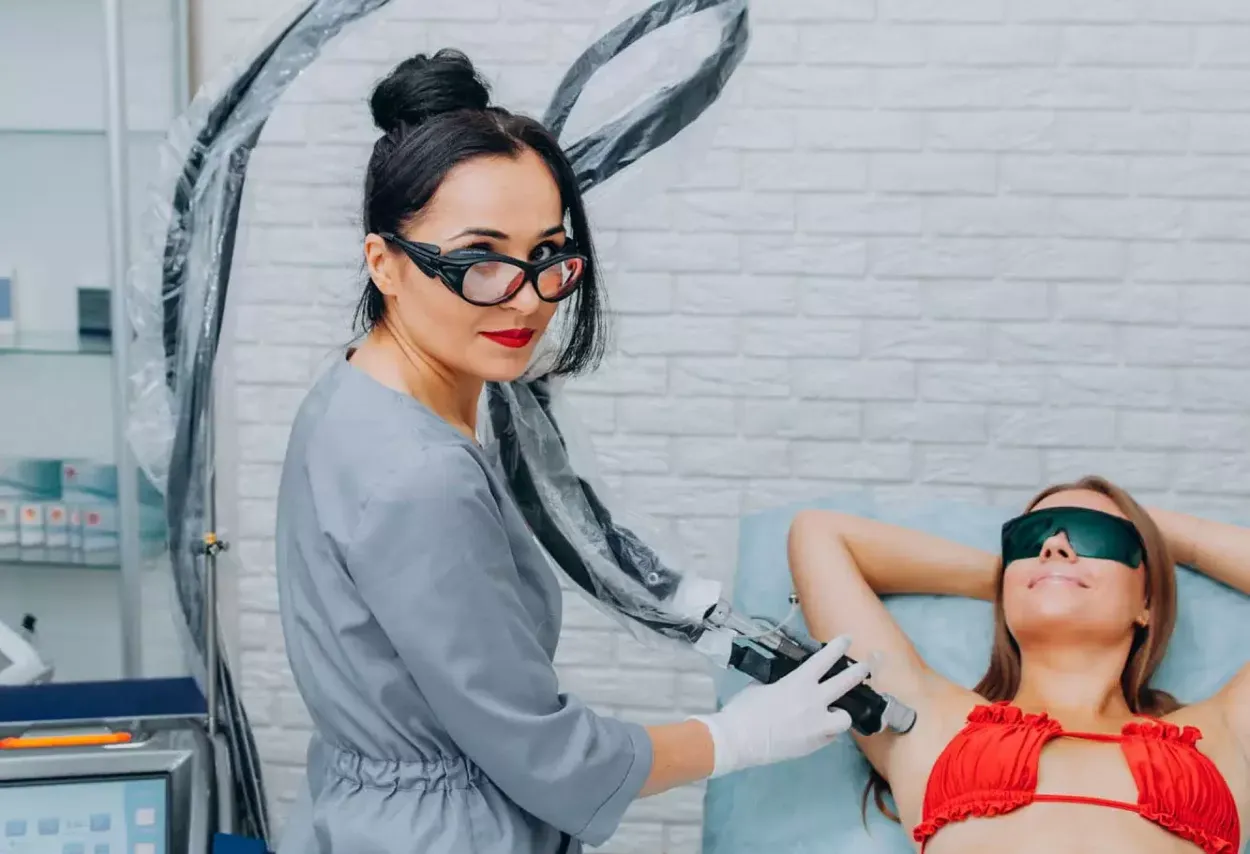
Because it is the only one that destroys the root. The laser beam is attracted by the pigment inside the hair follicle and destroys it with thermal energy — the existing hair loosens and falls out, and a new one has nothing to grow from. No follicle, no hair, no ingrowth.
What that means in practice:
- A complete course requires 5 to 8 sessions spaced four to eight weeks apart; the exact number is set by a trained specialist individually.
- You will notice a reduction of up to 20 % of the hair after the very first application.
- In up to 80 % of clients the hair does not grow back in the treated spot. If the follicle does recover, the growth is lighter, sparser and generally weaker.
- To keep the skin smooth, one maintenance treatment a year is enough.
A laser is not suitable for absolutely everyone, though — its contraindications and common side effects are covered in the article about the risks of laser hair removal. Before any procedure it is always right to discuss your condition with a professional; with us that is what the free consultation is for. Which of the two devices (the diode LightSheer DUET or the alexandrite Deka Motus AX Moveo) suits your skin and hair type is evaluated there — at one of our three Prague branches in Vinohrady, at Karlovo náměstí or in Vysočany.
Before you decide, a practical guide on how to shave intimate areas without leaving irritation behind may come in handy.
Nabídka měsíce
−50 %na klasické bikiny i bérce
Ke 3 zónám přidáme podpaží zdarma.
Sleva platí tento měsíc na klasické bikiny a bérce s koleny. Při výběru 3 placených zón přidáme podpaží zdarma navíc. Zvýhodnění uvidíte i v kalkulačce níže; podmínky potvrdíme telefonicky, žádné skryté příplatky.
Frequently asked questions
Home mixtures of turmeric, baking soda or honey act only on the surface of the skin — they can soften the hair or wipe it off mechanically, but they do not reach the follicle. They therefore cannot bring a lasting result.
Sugar paste. It is applied to the skin and removed with a sharp pull together with the hair, much of which comes out with the root. The follicle stays intact, though, so the procedure repeats.
Roughly 2 weeks. Before the hair grows enough for the paste to catch it again, the procedure repeats every 5–6 weeks.
Yes. The fact that the ingredients are natural does not mean every skin tolerates them. Always test a new mixture on a small patch first, especially in the sensitive intimate area.
No. A paste from baking soda softens the hair at most, and herbs such as marjoram or maca affect hormonal balance, not the growth itself. Neither reaches the follicles located deep under the skin.
When hair suddenly appears where it did not grow before, or when it is dark and coarse. It may be a hormonal imbalance, hirsutism or PCOS — the cause is determined by a doctor, not by cosmetics.
Related articles

Epilation vs depilation: the difference and which method to choose
Epilation vs depilation explained: how they differ, how long shaving, wax, an epilator, IPL and a laser last, and which method pays off for which body zone.
Ingrown hairs in the underarms: causes, prevention and solutions
Why underarm hair grows inwards, how to recognise inflammation and what to do about it. A comparison of hair removal methods, prevention, and how laser hair removal of the underarms solves ingrowth.

Laser hair removal FAQ: answers to the most common questions
Laser hair removal in questions and answers: pain, number of sessions, preparation, aftercare and zone prices. Everything you want to know before your first visit.