Ingrown hairs in the groin: causes, prevention and solutions
Why hair in the groin grows inwards, how to recognise inflammation and what to do about it. Prevention, products and the method that removes ingrowth at the root — laser hair removal.
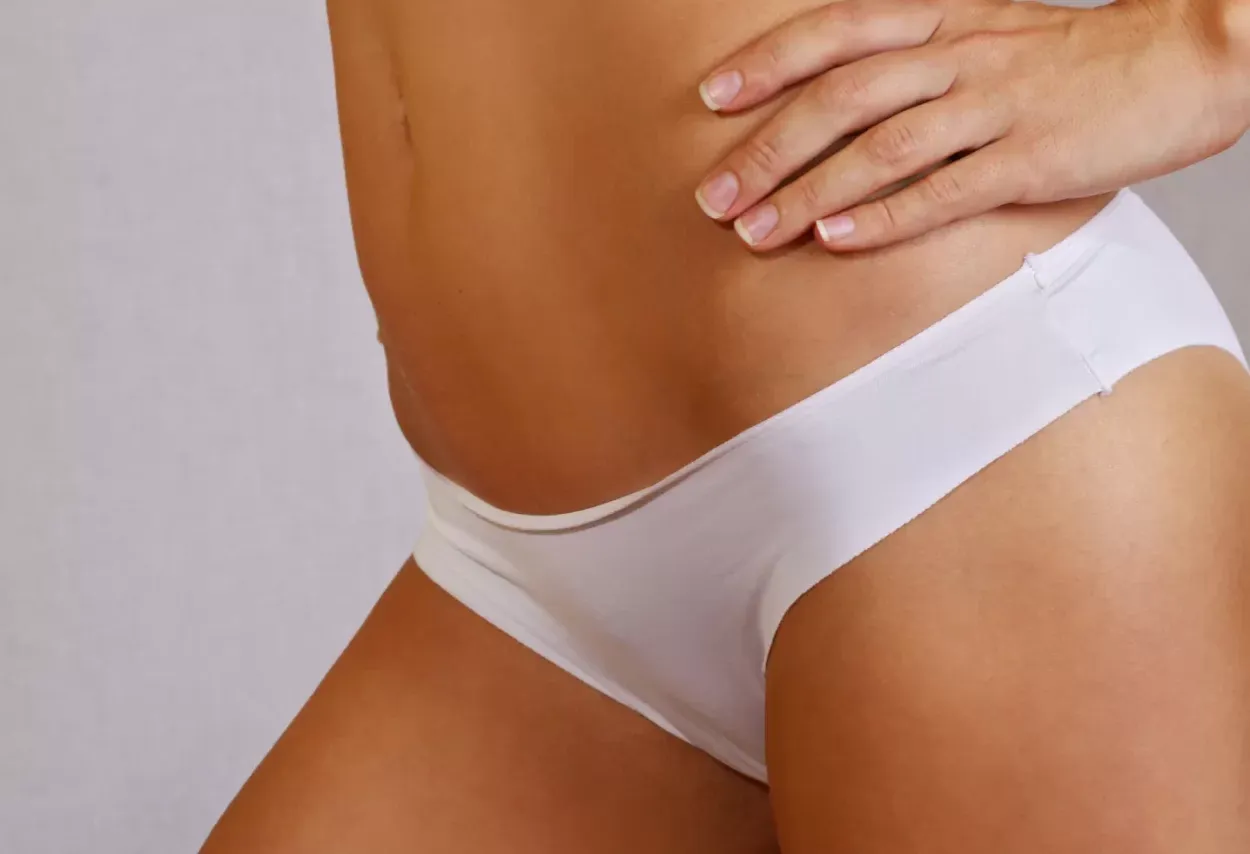
Why does hair in the groin grow inwards?
Because three unfavourable circumstances meet in this area at once: a fold of skin, frequent hair removal and friction from underwear. After shaving or depilation the regrowing hair is weaker and has a blunt end, so its route to the surface is harder — and when it does not manage, it turns around and keeps growing under the skin. The body answers with inflammation.
Ingrowth in the groin is not a disease and in most cases it is an aesthetic problem. It should not be underestimated, though: there are cases where the infection spreads and damages the surrounding tissue, and small scars resembling acne scarring can then form in that spot.
What actually is an ingrown hair?
An ingrown hair is a shortened or newly growing hair that cannot get from under the skin through the outermost layer of the dermis. It changes its direction of growth, turns downwards and continues growing just under the surface of the skin. The body deals with this unnatural situation as it does with others — with inflammation. Its visible result is a small red spot that can be painful to the touch.
Which causes are behind groin ingrowth most often?
Susceptibility to ingrowth differs from person to person, but the factors that make it worse keep repeating:
- Inherited predisposition. Genetics decide whether you have hair that is too thin, weak or curly — and it is exactly that hair which grows inwards most easily.
- An area in a fold of skin. The groin and the underarms are more prone to ingrowth than flat areas of the body.
- Insufficient skin care. Without regular exfoliation, an impenetrable barrier of dead skin cells forms on the surface; together with insufficient hydration it markedly raises the risk of ingrowth.
- Unsuitable shaving technique. Shaving against the direction of growth, pressing on the razor and a blunt blade are the most common “home” cause.
- The wrong procedure during depilation. With waxing and sugaring you have to follow the recommended direction and pull the strip off with a fast, smooth movement — otherwise the hair may snap instead of being pulled out.
- Friction and irritation. Tight underwear and aggressive cosmetics irritate the skin and make things worse.
- Hormonal changes. Fluctuations during the menstrual cycle or in pregnancy affect hair growth.
- Excess weight and diet. More skin folds mean more friction; a diet rich in fats and sugars can also affect hormone levels unfavourably.
Non-breathable clothing: an underrated culprit
Most of today’s wardrobe is synthetic. The skin does not breathe under polyamide or nylon, so you sweat more in the groin and a freshly shaved area is literally steamed — and that reliably makes ingrowth worse. Non-breathable material also encourages infection of the follicles and raises the risk of vaginal inflammation, especially if you have previously disrupted the microflora with a depilatory cream. Treating such inflammation tends to be lengthy and the infection likes to come back.
Unsuitable methods and chronic irritation
Ingrowth is also affected by how you remove the hair:
- Daily shaving irritates the skin and leads to crooked hair growth — combined with sweating in non-breathable underwear it is the surest route to ingrowth.
- Plucking with an epilator or wax can occasionally cause lingering inflammation of the follicles in sensitive people.
- Depilatory creams are gentler on the skin than a razor, but their aggressive composition means they cannot be recommended for the genital area.
When you stress the intimate area with outdated methods over a long period, you risk chronic irritation of the follicles — and that brings unwanted pigment spots alongside ingrowth.
How do you recognise an ingrown hair and when should you see a doctor?
The typical picture is easy to recognise and usually appears a few days after shaving or depilation:
| Symptom | How it shows |
|---|---|
| Itching | The first and most common signal in the treated area |
| Redness and irritation | The skin is sensitive, inflamed and painful to the touch |
| Hard, painful lumps | Inflammatory formations under the skin, painful when touched |
| Darker, more visible hair | The hair shows through under the surface of the skin |
| Worse sweating | Hair blocks the outlets of sebaceous and sweat glands |
A dermatologist is needed when the problem recurs on a larger scale, when the inflammation spreads or when small scars remain after ingrown hairs. A one-off ingrown hair is not that dramatic.
What can you do about a single ingrown hair at home?
You can handle an isolated ingrown hair yourself: clean the skin thoroughly and use sharp tweezers to release and straighten the hair. Nothing more — no squeezing or scratching, which only raises the risk of spreading the infection.
If the problem troubles you on a larger scale, however, a dermatologist should step in and another way of removing unwanted hair should be considered. Repeated ingrowth is not a matter of bad luck but of the chosen method.
How do you prevent ingrown hairs in the groin?
Prevention rests on two pillars: prepared skin and a gentle technique. Products that have proven themselves:
- Creams with salicylic acid. In a higher concentration it supports peeling of the skin, cleans it and reduces sebum production. Skin free of impurities, excess oils and dead cells is easier to break through even for weaker hair.
- Exfoliation (a scrub). The strongest ally in the fight against ingrowth. Do it at least the day before shaving; you can add a massage with a special brush. Do not overdo it — too frequent or aggressive exfoliation irritates the skin.
- Retinoids. Vitamin A derivatives support gentle exfoliation and prevent keratin from building up in the hair follicles.
- Soothing oils and gels. Antiseptic ingredients such as tea tree oil and aloe vera help against inflammation; to ease irritation, lavender, calendula or chamomile oil is ideal.
- Moisturising creams for sensitive skin without fragrance and alcohol.
Plus practical rules that have proven themselves over time:
- Let the hair soften in the shower for a few minutes — warm water makes shaving easier for the skin too.
- Shave in the evening so irritated skin can rest until morning.
- Go with the direction of hair growth, do not press unnecessarily on the razor and use a foam or gel that helps it glide.
- Keep blades sterile and all tools clean; throw blunt blades away straight away.
- Avoid heavy sweating for about two days after any depilation — otherwise you needlessly raise the risk of infection under the skin and subsequent ingrowth.
- Even an ordinary loofah handles exfoliation with regular scrubbing: removing dead flakes helps the hair reach the surface.
The state of the skin from the inside plays a role too. Vitamins A and E support skin quality and collagen production, vitamin C benefits the blood vessels and speeds up healing — a body that regenerates well deals with minor inflammation faster.
The complete procedure is in our guide on how to shave intimate areas. After treatment choose loose underwear from natural materials that does not rub the area unnecessarily.
Which methods make ingrowth worse and which help?
The hair removal method decides whether you will be dealing with the problem at all:
| Method | Effect on groin ingrowth |
|---|---|
| Shaving with a razor | A result for a few days; the risk can be reduced with correct technique, but it does not disappear |
| Depilatory creams | Chemically break down keratin, may irritate; must not get onto the genitals |
| Wax | Painful and aggressive to the skin, unsuitable for sensitive zones; the hair may snap |
| Sugar paste | Gentler than wax, but the same risk of a snapped hair and weaker regrowth |
| Electric epilator | Does not solve groin ingrowth — on the contrary, it leaves the area irritated |
| IPL | Disrupts the follicle but does not destroy it; individual pulses sting unpleasantly and after a few months ingrowth returns — it is more like regular depilation than lasting epilation |
| Laser hair removal | Destroys the hair follicle, removing ingrowth at the root |
The weakness shared by every method except the laser is the same: the hair follicle stays functional. The newly grown hair is then often weaker and blunt-ended, so it breaks through to the surface even worse than the original one — and the circle closes.
How does laser hair removal solve ingrowth?
The laser is the only method that destroys the root of the hair. The strong beam is attracted by the pigment inside the hair follicle and the thermal energy destroys it. The existing hair is released and falls out, and a new one has nothing to grow from. No follicle, no hair, no ingrowth.
The timeline you can expect in the groin:
| Time from the first treatment | What changes |
|---|---|
| 1 month | 5–75 % of the hair disappears from the treated area, the end of daily shaving |
| 3 months | Markedly less hair, irritation and ingrown hairs recede; shaving 2–3 times a week |
| 1 year | The series of sessions is complete, the skin is smooth; shaving 1–3 times a month |
So why is one session not enough? Only about a quarter of the follicles are in the active growth phase at any one moment, while the rest hibernate — and the laser acts precisely on the active ones. The sleeping ones stay untouched and continue their cycle, so their turn comes only in later sessions.
A complete course therefore means 5 to 8 sessions spaced four to eight weeks apart; the whole process takes several months on average. Afterwards a maintenance treatment once a year is recommended. The total number is individual — it follows the properties of your hair and skin, the settings of the device and the experience of the trained specialist operating it. Precisely because destroyed active follicles no longer produce anything and the sleeping ones continue their normal cycle, the hair stops growing crooked — and so there is nothing left to grow inwards.
Indicative prices per session: classic bikini 1 500 CZK, deep bikini 2 500 CZK, buttocks 1 500 CZK. We confirm the exact price according to the extent at the free consultation. Men undergo epilation of the groin and intimate areas for aesthetic and hygienic reasons just as women do, and painful ingrowth tends to be one of the main reasons — the offer for men is in the laser hair removal for men section.
How do you prepare for laser hair removal of the groin?
The preparation differs from other zones only in details, but all of it needs to be followed:
- For at least 4 weeks before the procedure do not use any other epilation method — only shave the spot with a razor.
- For 7 days before the application the skin should not be exposed to direct sun. An older tan is not a contraindication.
- The day before, avoid alcohol and shave the groin, or the whole area, with a razor.
- On the day of the visit do not apply any cosmetic products to the spot.
After the treatment do not irritate the skin with creams and prevent mechanical damage. Mild redness is completely normal and usually fades soon; if it itches, the trained specialist will recommend a soothing product. For two days after the session also avoid heavy sweating and greater physical strain. Protect the skin from direct sunlight for a month. Bring a skirt or loose trousers and comfortable underwear from natural materials to the appointment. A complete overview of who the laser is not suitable for is in the article about the risks of laser hair removal.
Ingrowth does not concern only the groin — we write about the whole sensitive area in more detail in the text about ingrown hairs in the intimate area. You can come and talk to us at any of our three Prague branches (Vinohrady, Karlovo náměstí, Vysočany), open every day from 9:00 to 21:00.
Nabídka měsíce
−50 %na klasické bikiny i bérce
Ke 3 zónám přidáme podpaží zdarma.
Sleva platí tento měsíc na klasické bikiny a bérce s koleny. Při výběru 3 placených zón přidáme podpaží zdarma navíc. Zvýhodnění uvidíte i v kalkulačce níže; podmínky potvrdíme telefonicky, žádné skryté příplatky.
Frequently asked questions
The groin is an area in a fold of skin where friction from underwear is added to weaker regrowing hair. The increased tendency is also due to this area being shaved or depilated more often than the rest of the body.
A shortened or newly growing hair that cannot break through the top layer of skin, turns around and keeps growing under the surface. The body reacts with inflammation, which shows as a small red spot that is painful to the touch.
Clean the skin thoroughly and use sharp tweezers to release and straighten the hair. If the problem recurs on a larger scale, a dermatologist should step in.
No, rather the opposite. The newly regrowing hair after them is weaker and has a blunt end, so it breaks through to the surface less easily. With wax and paste there is also a risk that the hair snaps and keeps growing under the skin.
Because it is the only method that destroys the hair follicle. Without a follicle there is nothing to regrow, and therefore nothing to grow inwards. The other methods leave the follicle functional.
Related articles

How to shave intimate areas step by step
How to shave intimate areas without irritation? A six-step procedure, the tools, aftercare and the mistakes that cause spots and ingrown hairs.

How to shave your buttocks: step by step and without irritation
How to shave your buttocks safely: preparation, trimming, shaving technique and aftercare. The most common mistakes that lead to spots, and when a laser is the better choice.

Ingrown hairs in the intimate area: why they happen and how to get rid of them
Why hair in the intimate area grows inwards, how to prevent inflammation, what to do with an ingrown hair and why ingrowth disappears completely after laser hair removal.